
If you have been following my blog, you have probably already read my post about the old town of Kotor. In case you haven’t, I recommend that you begin with it.
The Fortress of Saint John (or San Giovanni) is an impressive fortification, visible from everywhere in the old town. It was built in a vantage position above the town and consists of not just a simple fortress: the ramparts are stretched out long on the mountainside.
From Ancient Times to This Day
Even the Illyrians, the tribes inhabiting the area before the Romans, recognized the importance of this vantage point, and built a fortress there. Romans, then the Byzantine Empire reinforced it with further military structures. However, it retained its current shape when Kotor came under the protection of Venetians. They extended the fortifications to fend off attacks by the ever-rising Ottoman Empire. The last time the fortress played a historical role was when Austria-Hungary renovated it to defend the naval base below. Today, it is one of the main tourist attractions of Kotor.
How to Get Up There (Option #1)
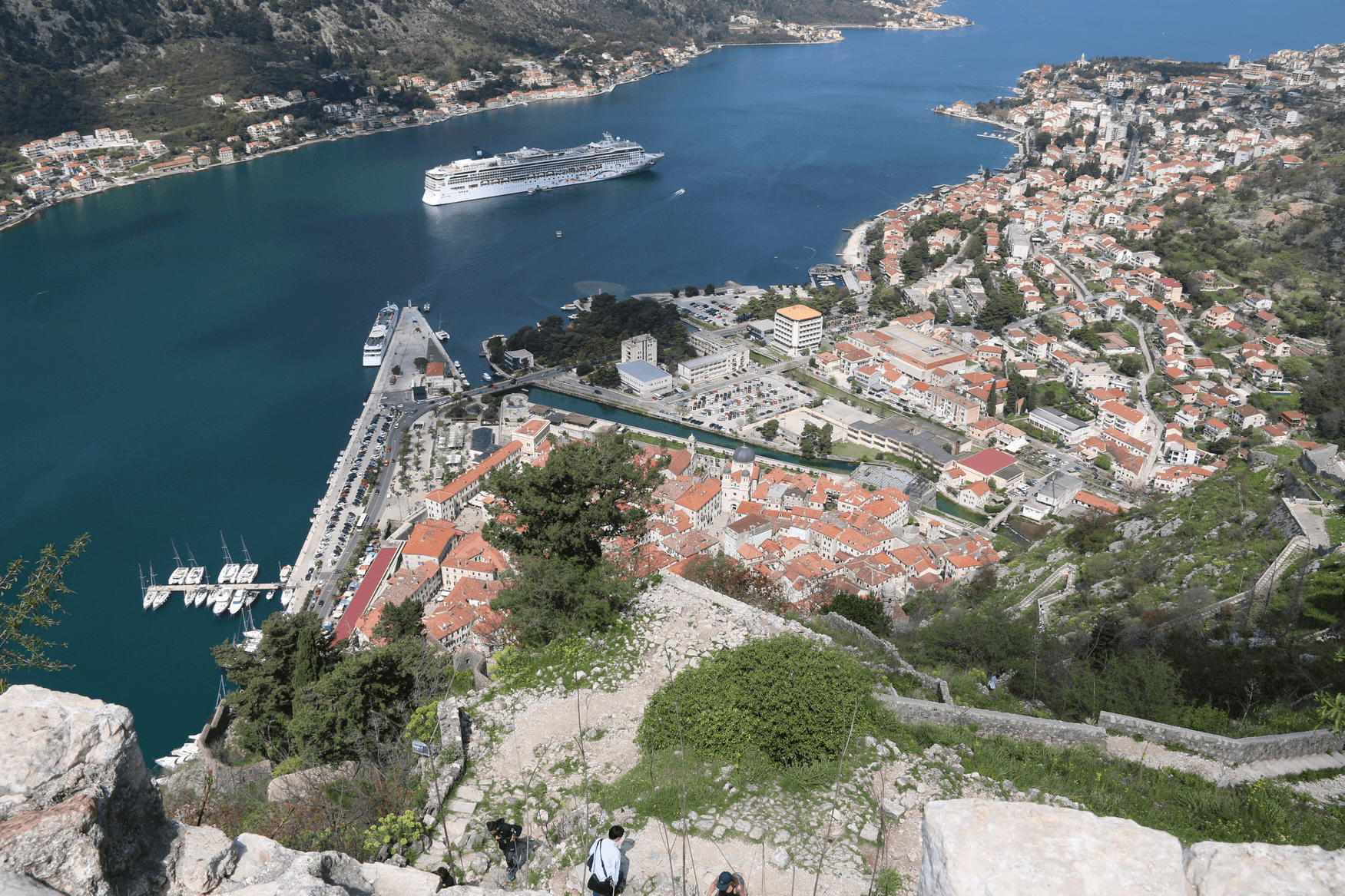
When in the old town, go to the Church of St. Mary Collegiate, and take the first street in the direction of the mountainside. The street takes you to the stairs. At this point, there is a ticket booth that charges €8.00 per person (some signs say you need to pay €10.00). So far, so good — now, you only have to climb the 1,350 stairs leading up to the fortress. Some of the stairs are not in the best condition, so make sure not to trip over and fall. The hike is going to be demanding, but the reward is one of the most spectacular views of the whole region:
Halfway up to the top is Church of Our Lady of Remedy (Crkva Gospe od Zdravlja). Erected in commemoration of medieval plagues in the 15th century, it was altered in the 18th century. The church is an ideal spot to relax a little bit before starting the second half of the hike. Apart from resting there a while, sometimes you have to stop there. Especially in the high season, tourist crowds are so big that you have to wait for others to pass. The small platform in front of the church is the best place to do that. In total, you need around 50 minutes to get up to the fortress.
How to Get Up There (Option #2)
If you are a bit more adventurous, want to avoid the crowds (and last, but not least, want to avoid paying €8.00), you might want to try another route. The tradeoff is that you hike longer, but the scenic detour is worth it.
The Ladder of Kotor
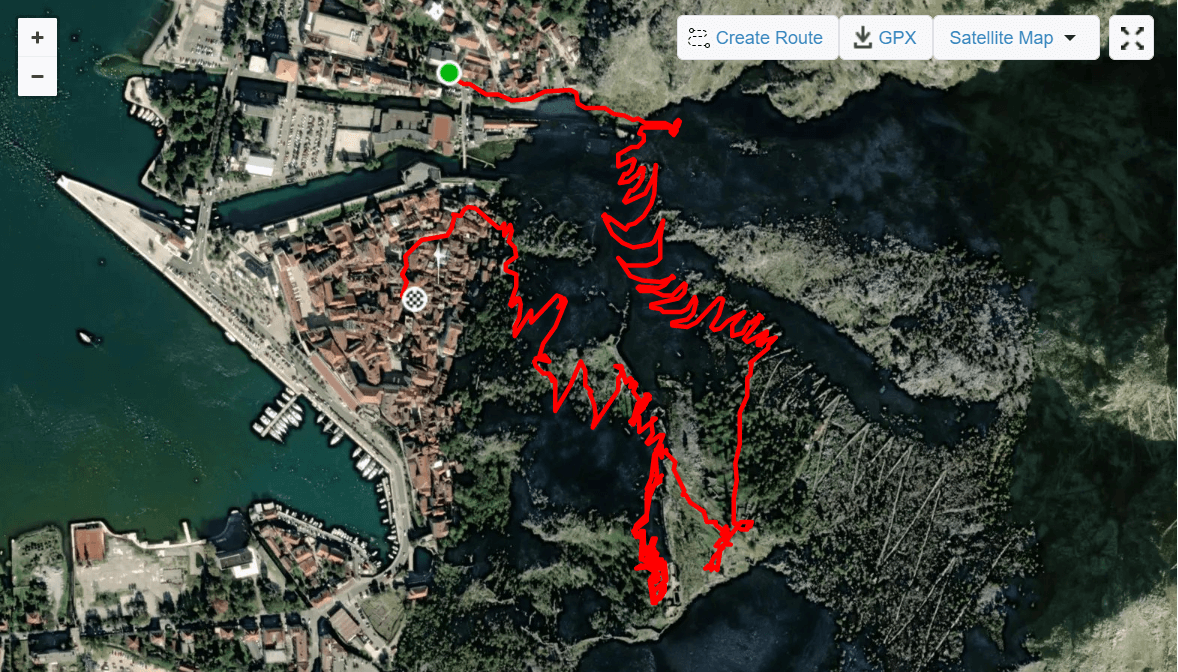
Option #2 involves a marked tourist trail called the Ladder of Kotor. Just around the corner is Škurda canal coming from the mountains, right in front of the city ramparts. To walk on the other side of the canal, take the street between Kamelija Shopping Center and the VOLI supermarket and walk toward the end. Follow the canal (now a creek) when you arrive to a former hydroelectric power plant (now a pump station, labeled “Vodovod”).
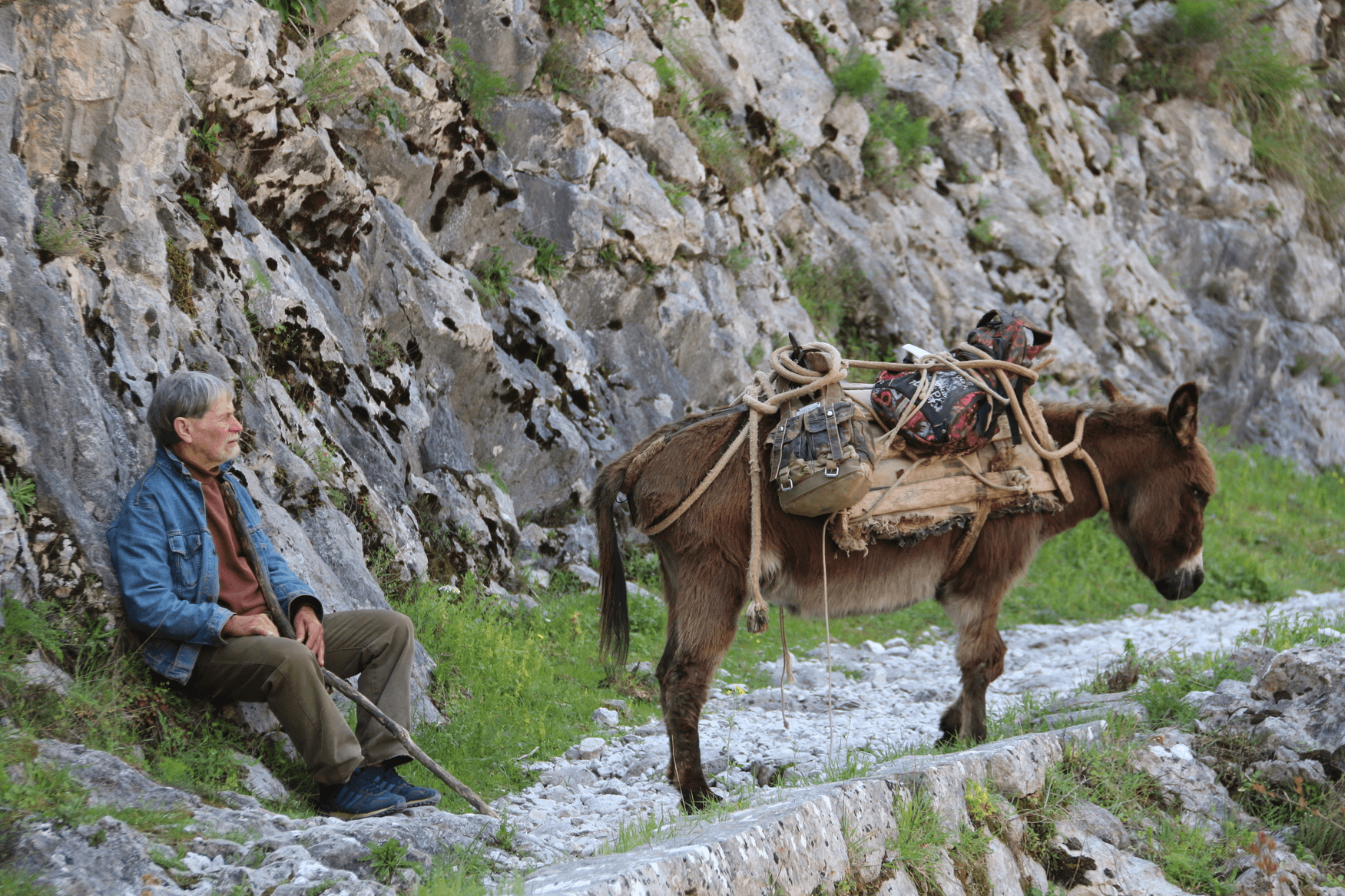
This is where the Ladder of Kotor begins. Winding up the steep mountainside, the trail connected the town of Kotor with Montenegro (a different jurisdiction back then) for centuries. Vendors with their pack mules transported goods in hope of selling it at the city market. The “trail” is not just a trail, but a primitive rocky road — imagine the effort needed to construct it! Sometimes you can still see traditional forms of transportation on this ancient road:
For the more adventurous, a via ferrata route starts right back at the pump station. (Just go a little further toward the mountain and follow the creek.)
After quite a couple of hairpin curves, you will arrive to a stone house, advertising homemade drinks and other loca specialties. Here is where two trails diverge: one goes to the right to the fortress, while the Ladder of Kotor continues its winding path uphill, eventually reaching the village of Njeguši. (Njeguši is covered in another blog post.)
Špiljari Village
Below the fortress is the abandoned village of Špiljari, which looks like a Macchu Picchu on a European seacoast. One family, however, still holds out. So much so, that they run a small food bar, offering local cheese, ham, beverages and probably one of the best scenery a bar could have. Make sure to pay them a visit if it fits into your schedule.
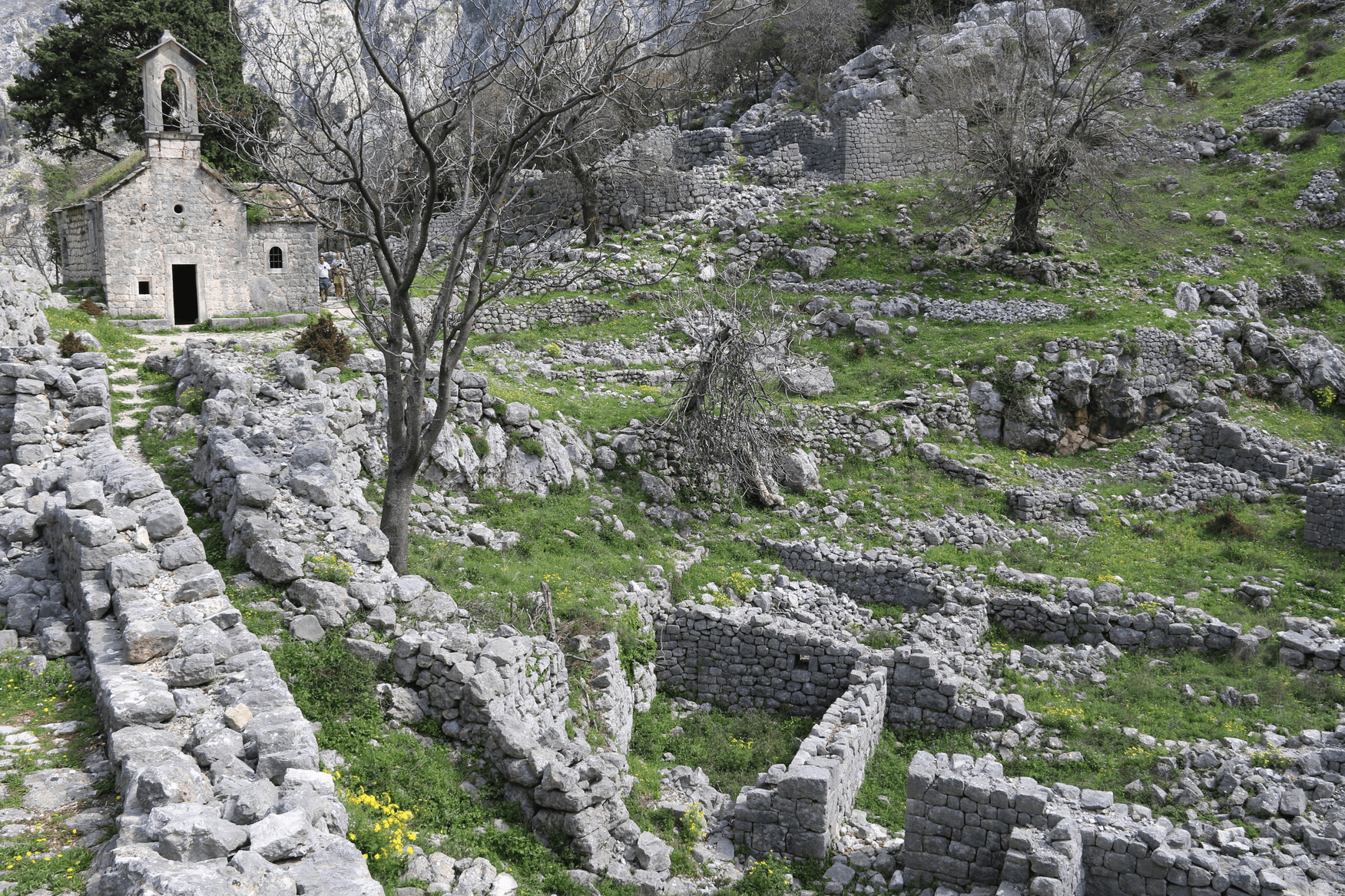
Now that you are ready to enter the fortress, make your way through the ruins of the village. What you will arrive to is a window on the fortress’s walls, with a warning sign saying you should NOT enter the fortress. (If you think that climbing through a window with a NO TRESPASSING sign next to it is not a good idea, I’m not saying you should do it. For those of you who think it is, you haven’t heard it from me.) A little bit contradicting to the sign is a ladder right below the window. Make your way to the actual fortress.
The Fortress
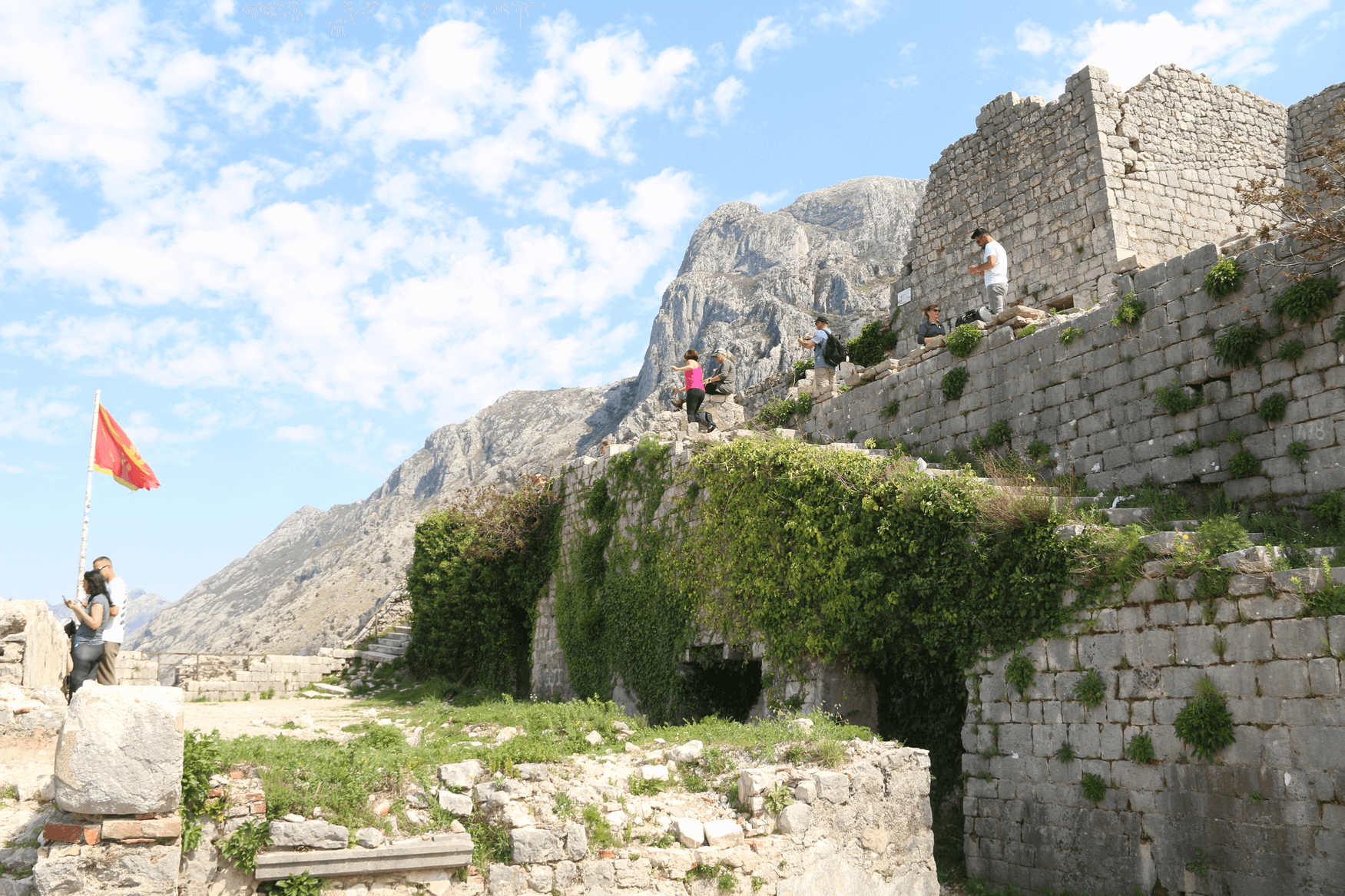
The fortress consists of an outer and an inner structure, connected by a steel bridge. Unfortunately, the whole area is poorly maintained. The roofs of most buildings have caved in and especially the rooms are full of garbage. Make sure that at least you do not add to this pile up!
The silver lining is that your reward is one of the best views from the area: on one side, you can see the entire inlet (maybe with even a cruise ship moored) and the old town below, with the abandoned village on the other side.
Some Practicalities
First and foremost, grab a good pair of shoes — seriously, both the trail and the steps are going to torture your feet if you don’t have one. Second, pack enough water for the hike. You will need it, especially if you hike in the summer months. You can get a half-liter bottle of water in any supermarket for only €0.40. Vendors are all along the way up to the fortress, but be prepared to pay as much as €3.50 for one bottle.
The official “opening hours” are from 8am to 8pm. My advice is to start early in the morning (to avoid hot weather), plus, you don’t have to worry about your safety when heading back to downtown. The fortress is illuminated at night, but it’s more just floodlights pointed at the building, but not the trail.
All in all, combining the scenic route and the stairs, the whole hike took me a little over 2 hours, covering an elevation of 1,200 feet (365 meters) over a distance of 3.0 miles (4.8 kilometers).
Do you want to see more of it? Watch my virtual fortress walk. Is just one fortress is not enough for you? Check out my blog post about some of the other fortifications in the bay area.