
You probably haven’t heard about this country yet. Or, you have, in connection with the brutal war that took place here in the early 1990s. If that is the case, you might ask yourself: is there anything left to see? Is it dangerous? Is it a good idea going there? You’re not alone with these questions. People asked us these questions when they heard we were heading to Bosnia. In this post, we’ll hopefully be able to give you a more impartial picture and insights about this country.
While the war in 1990s earned this country a bad reputation, I am pointing out to the many positive things you can find here. Don’t get me wrong: Bosnia and Herzegovina has its many downsides: rampant corruption, low living standards, the physical and psychological scars left by its recent history. You’ll be rewarded, though, with natural scenery that is unrivaled by much of Europe, rich local culture, food and hospitality.
So Why Do People Call It “Bosnia and Herzegovina”? Isn’t It Just “Bosnia”?
First, a bit of clarification: for the sake of simplicity, most people refer to this country as “Bosnia” instead of its long official name – Bosnia and Herzegovina. (It’s so long that sometimes people simply use the local abbreviation — BiH.) Two geographical regions make it up – Bosnia, in the north and the middle of the country, and Herzegovina, in the south. The distinction is purely based on geography and history, it has nothing to do with the country’s administrative system.
Bosnia (let us just call it by its shorter name) does have two major administrative regions. The Federation of Bosnia and Herzegovina is in the middle with Sarajevo being its capital city. The Serbian Republic (Republika Sprska) is a sickle-shaped region around the Federation.
Going Back to the Middle Ages
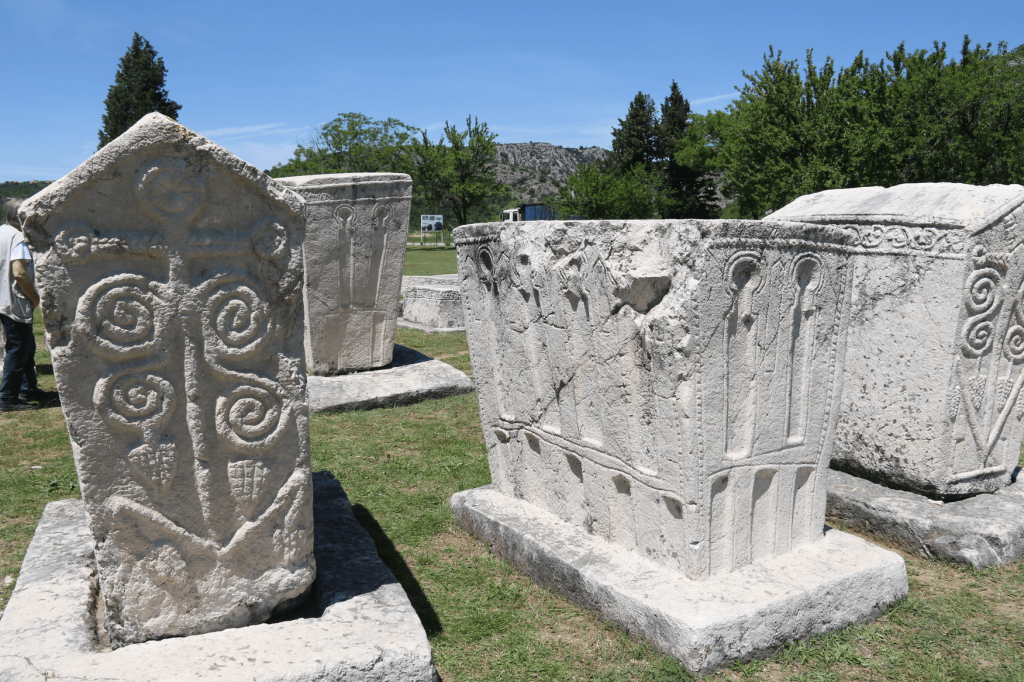
Without knowing the history of Bosnia, it would be hard to understand the basics of why the war happened in the 1990s. In the Middle Ages, Bosnia was an independent kingdom in the Balkans. Inhabited by Slavic people (speaking practically the same language as the Serbs and the Croats), this mountainous, isolated country was at the crossroads of cultures. With the Great Schism, when Catholic and Orthodox Christianity started to diverge, Bosnia found itself on the dividing line. Both major denominations wanted to claim it. Bosnia responded with establishing its own rebel church, incurring the wrath of both Rome and Constantinople.
The Ottoman Conquest
By the 1460s, the mighty Ottoman Empire was pushing northwards deep into the Balkans. Bosnia fell to the Ottomans. Having a weak and heretic church, internal strife and other factors meant that the local population wasn’t resisting too much when the Ottomans conquered the area. In fact, Bosnia was very susceptible to a new religion and quickly adopted Islam. The Ottomans brought new inventions, prosperity and investment. Sizeable Croatian and Serbian minorities also lived in the country. What resulted was an ethnically very diverse land with three main religions.
Modern Times
In 1878, Austria-Hungary occupied Bosnia, and after some 400 years of Turkish rule, started westernizing it. Since the last 200 years of Ottoman rule, the region was steadily declining, Austrians (even though they were seen as invaders) brought prosperity again. Not everybody was happy with Austria having too much influence on Bosnia. Out of its diverse ethnic makeup, Serbs were encouraged to join neighboring Serbia. So in 1914, when Archduke Franz Ferdinand visited Sarajevo, a Serbian man killed him, technically firing the first shot of World War 1.
After the German occupation in World War 2, war came to Bosnia once more in the 20th century. In the early 1990s, a series of wars broke out on the ruins of former Yugoslavia. Croats and Serbs both wanted to claim the country their own. A large proportion of the population was — and is — still Muslim. (Local Muslims are called Bosniaks.) In the subsequent conflict, tens of thousands of people were killed, both civilians and soldiers.
What It Looks Like Now
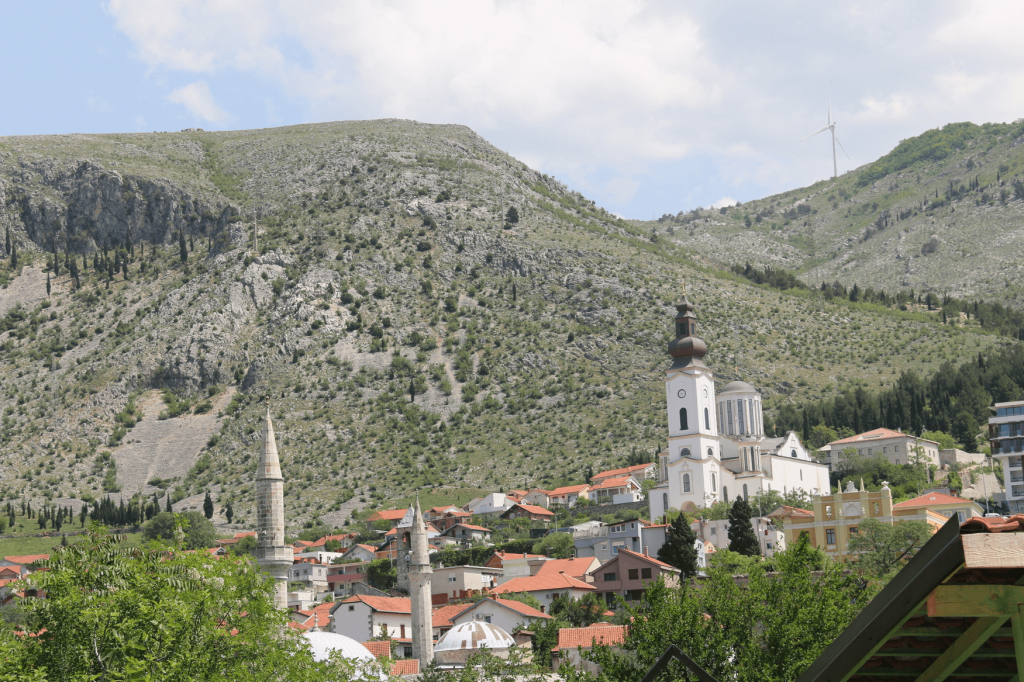
Nearly 30 years after the war, the country is still in the process of rebuilding and redefining itself. On the surface, everything seems calm. People go about their businesses, live their everyday lives, you can see road constructions and new buildings. Of course, the vestiges of war are still visible — but most buildings have been renovated. Instead of food shortage and power outages, you will find shopping malls full of retail stores, people going to pubs and concerts. On the surface, Bosnia and Herzegovina seems like just another country in the Balkans. Lower wages and living standards, of course, than in the more fortunate parts of Europe, but it still is a normal country.
It also has immense natural resources. Sometimes dubbed the “Switzerland of the Balkans”, it boasts high mountains, ski resorts, ancient ruins, fresh air and places for whitewater rafting. Water is probably Bosnia’s most important natural resource. Locals often tell the story about their companies importing mineral water from Slovenia, although Bosnia could potentially be one of Europe’s major exporters of mineral water. Hydroelectricity is very important, too.
Issues Still Persist
Only if you go beyond scratching the surface will problems emerge. Locals complain about high unemployment figures and ineffective government policies. Nationalism is very much present in every ethnic minority of the country. The visible scars of the war are probably easier to heal than the psychological ones. Almost every family was involved in the most recent war, and almost every family lost at least one relative. Talk to locals and you will find that everyone has a different perspective on how things happened, depending on their ethnic background. Most of the population, if silently, but still hold many grudges. The country has three leaders (one from each constituent ethnic group), supervised by a UN representative who has the right to veto decisions. All this results in important decisions being made impossible.
Once one of the most land mine-contaminated countries in the world, the government set an ambitious goal to demine all of the country by the early 2020s. In remote areas, there still might be some land mines, and as a rule of thumb, you should always stick to concrete roads. If you want to hike, stay on the hiking trails and ask locals about the mine situation.
So Is It a Good Idea to Go There?
Whatever the future holds, Bosnia and Herzegovina is a country worth checking out. Hopefully, it will slowly get better and better. Do your homework and research on it, exercise caution like anywhere else. One thing, though, is clear: you don’t have to be scared of an ongoing conflict or violence. Bosnia is getting more tourism, so you can check it out before everyone does!