
Just like the ethnic makeup and architecture of Bosnia and Herzegovina, its cuisine is also very colorful. The influence of the Ottoman Empire was very strong in this region, and it also left its imprint on dishes and drinks. Many Bosnian dishes are also typical elsewhere in the Balkans. Bosnian cuisine is very heavy on meat and the country is not an ideal place for vegetarian travelers. However, since most restaurants serve salad as a side dish, even vegetarians won’t be starving here. Bosnia also offers a lot of sweet desserts of the Turkish delight type. The below list is just an “appetizer”, and far from being complete. If you think that a dish you tried is not included in this list, mention it in the comments below.
Ćevapi
Ćevapi (cheh – vah – pee) is a staple dish that you can find not just in Bosnia, but in pretty much everywhere in the neighboring countries. Without doubt, this dish is the most popular and even the smallest restaurants often have it on their menu. Ćevapi consists of ground beef (or lamb) meat, made into a form. It is served in a flatbread (pita, lepina), accompanied by onions, ajvar and/or kajmak.
Japrak
Japrak (yup – ruck dole – mah) is grape leaves stuffed with either ground meat or rice (or a combination thereof). The one that we had in Mostar came with mashed potatoes and a salad as a side dish. While eating grape leaves might seem weird, but it actually is a very filling dish.
Bey soup
This soup gained its name from former Bosnian noblemen called the “beys (or begs)”. The bey soup is a chicken broth, with seasonal vegetables such as carrots and celery. A special ingredient is the okra plant, which is often used in the Middle East. Lemon juice and sour cream are added to make the soup lighter and creamier.
Klepe
Klepe (kleh – peh) is one of our personal favorites. It is a very simple meal, consisting of ground beef or lamb, wrapped in dough “wrappings”. The lovers of Italian food might want to put it as a sort of “Bosnian ravioli”. Some seasoning is added to the ground meat, usually just pepper and salt. If you are staying in an apartment in Bosnia, try picking up some deep-frozen klepe in supermarkets to try on your own. Just pour the contents of the bag into boiling hot water, and let them boil for about 15 minutes.
Mantije
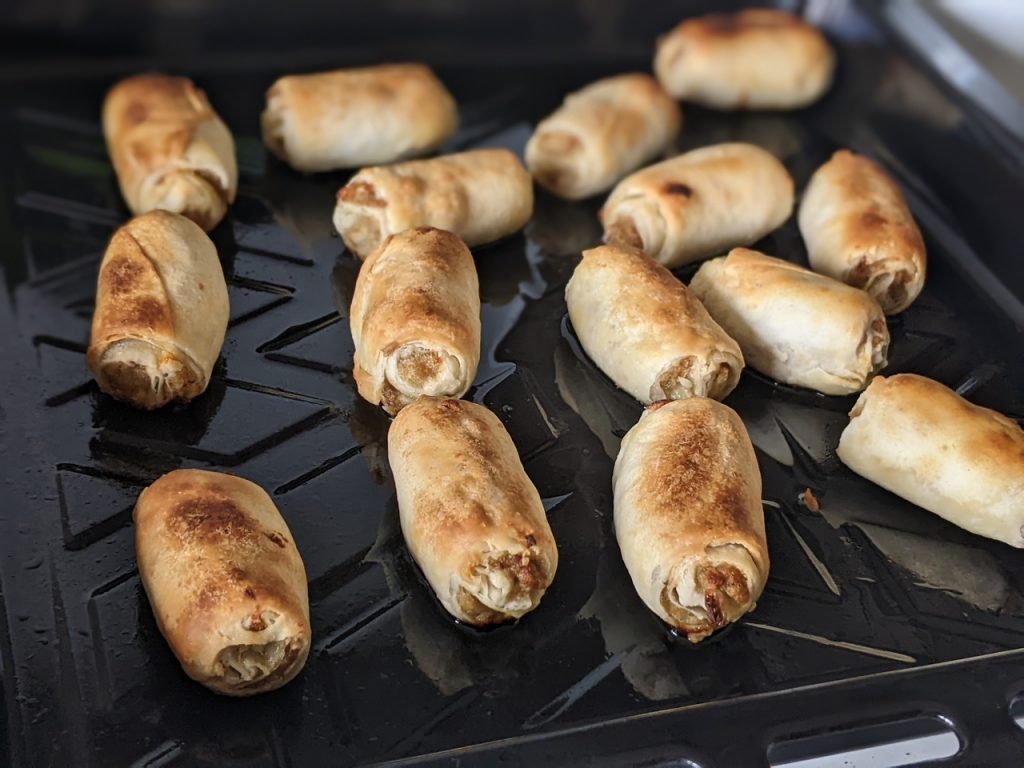
Similarly to klepe, mantije (mahn – tee – yeh) is also ground beef (or lamb), wrapped up in dough. Unlike klepe, the dough in mantije is rather a puff pastry dough. It is usually accompanied by a garlic-flavored yogurt that you pour on top of the mantije. Just like with klepe, you can buy this one in supermarkets, too. Put the contents of the package on an oily baking tray and bake for about 20-30 minutes. The accompanying yogurt is also easy to prepare. Buy plain yogurt from the supermarket, crush two cloves of garlic and mix it with the yogurt.
Burek
Burek (boo – rack) is a typical street food found in Bosnia and the neighboring countries. Every pekarnica (bakery) has at least two varieties of it. It is basically a type of thin, flaky dough, filled with something. Bosnian burek is rolled up. The main variety, referred to as simply burek, is filled with ground beef and onions. Some other popular types of burek are sirnica (filled with cottage cheese), zeljanica (filled with spinach and cheese) and krompiruša (filled with potatoes). Burek is often eaten for breakfast, and it is definitely a good way of filling you up before a long day spent seeing the sights.
Ćufte
Ćufte (choof – teh) are spicy meatballs served with mashed potatoes.
Pljeskavica
Pljeskavica is a sort of meat patty made of ground beef, lamb or pork (or often a mixture of these). It is very similar to ćevapi in that it is a heavy meal and a main course, but also because it is found in neighboring countries like Serbia, Croatia and Montenegro. Pljeskavica is usually accompanied by onions, ajvar and/or kajmak.
Bosnian Coffee
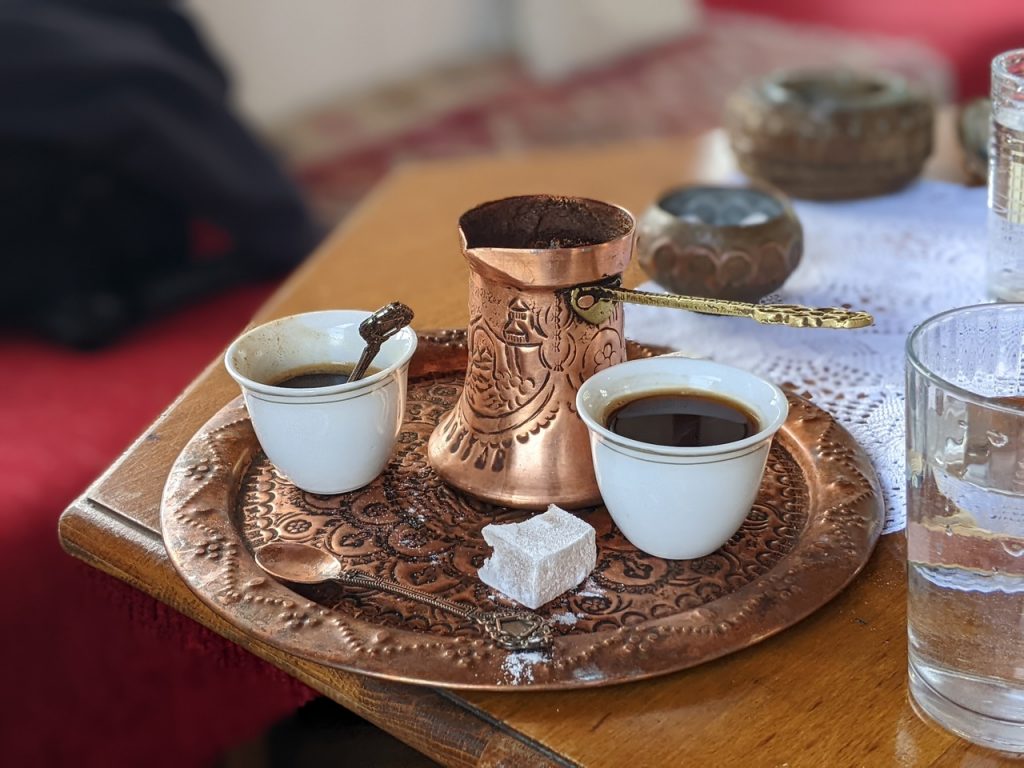
Bosnian coffee is the pride of the local culture. Water and ground coffee is added to a special copper pot called džezva and heated up. It is typically served in the džezva (also: cezve), along with sugar cubes, small drinking cups and Turkish delight on a tray. Since the coffee in the džezva also contains the coffee sediment, you are supposed to slowly pour it out into the drinking cup, so that the sediment stays in the cezve. A popular dessert served with the coffee is rahatlokum (or simply lokum), flavored and colored cubes of corn starch.
In Mostar, locals recommend that the best place to drink Bosnian coffee is at Café de Alma. Also, a good place is the café above the Old Bridge (it’s kind of a well-kept local secret, since mainly the bridge divers and locals go there). Since it’s directly above the bridge, on top of your coffee experience, you can watch a bridge jump from there. (It costs around € 2 or BAM 4.) In Sarajevo, there are several places, too, one being Café Kaffa in the Baščaršija part of the city.
Different Types of Turkish Delights
Bosnia has a wide variety of sweet pastries. Baklava is probably the best-known of them. It is a layered pastry, with pieces of chopped walnut between the layers. The whole pastry is cut into a triangular form, and is usually drenched in a sugary syrup or honey. It is very sweet! (This is also true for the other pastries as well.)
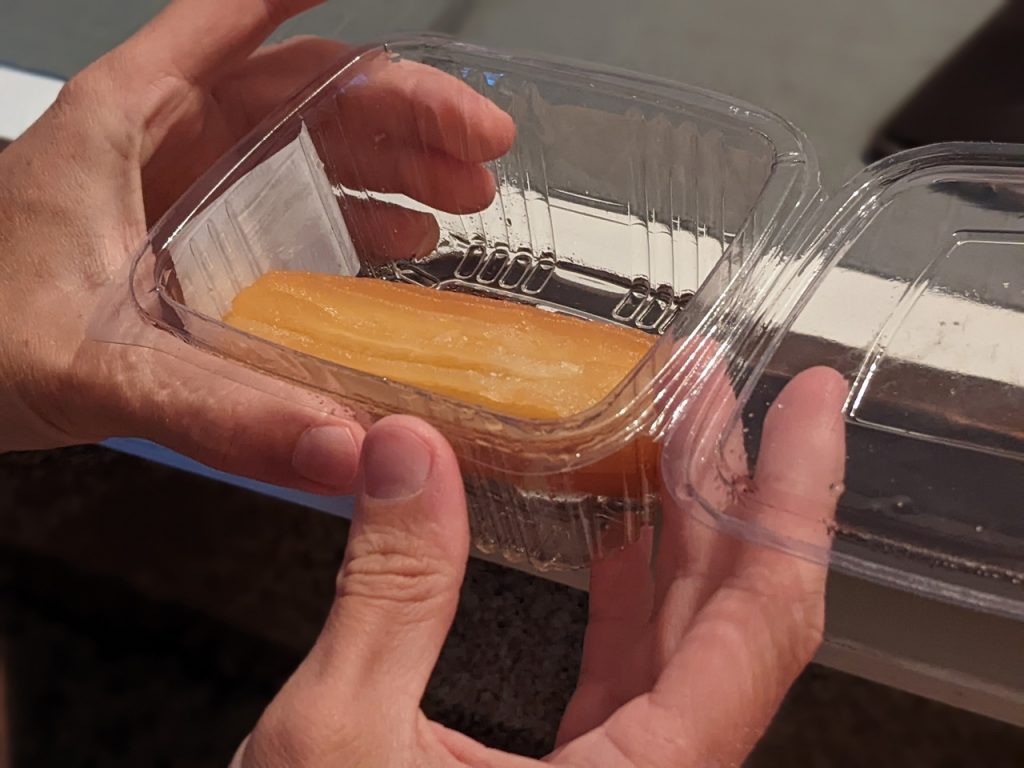
Tulumba looks a little bit like the Spanish churros, and basically it is deep-fried batter. Like all the other Bosnian sweet pastries, tulumba is also covered in syrup. Hurmašica is very similar to tulumba. Ruzice is basically nothing else than baklava, but the layers are rolled up, and the resulting rolls are placed vertically on a tray. Sometimes raisins are also added to it. The whole thing, of course, is covered with honey or syrup. Kadaif is very interesting in a sense that a thread-like shredded dough is used to prepare it.
Again: all of these pastries are very, very sweet. Tulumba and hurmašica are often served as a free-of-charge dessert in restaurants after meals. Baklava, ruzice and kadaif are even sweeter than the first two. Also, you can buy all these desserts in plastic boxes in supermarkets.
Tips
Sarajevo’s Baščaršija (old bazaar) has plenty of restaurants where you can sit down and try one of these specialties. There are three kinds of restaurants that you will see frequently: a ćevabdžinica is a barbecue place that primarily serves ćevapi, a buregdžinica serves burek and similar pastries, and an aščinica very simple, homemade dishes like bey soup.